
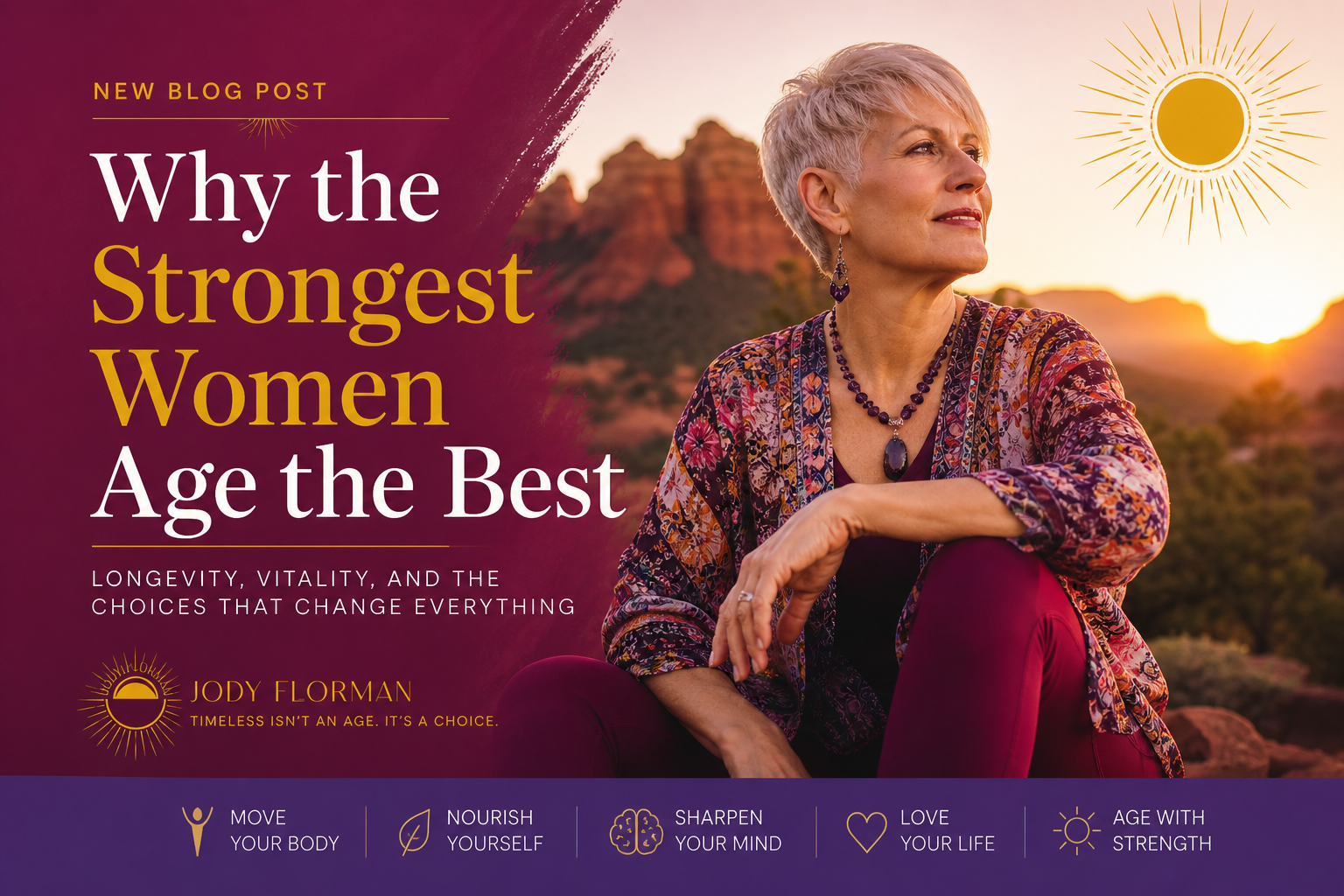
The truth about longevity, vitality, and what actually matters after 35
There’s a narrative about aging that’s been handed to women for decades—and honestly, it’s outdated.
You get older.
You slow down.
You lose your strength, your memory, your edge.
That’s the story.
But it’s not the truth.
The strongest women—the ones who feel good in their bodies, stay sharp, and actually enjoy their later years—aren’t lucky.
They’re paying attention.
Movement Is Not Optional—It’s the Foundation
When you get off the couch and move your body, something important happens.
You’re not just exercising—you’re communicating.
You’re telling your body and your brain:
“This matters. Stay online.”
Movement oils the machine. It wakes everything up.
And when you’re in motion, you start to notice things:
Where you’re tight
Where you’re weak
Where something needs attention
That awareness is power.
Because once you see it, you can work on it.
Energy Doesn’t Come From Rest—It Comes From Movement
Most people think they’re tired because they’ve done too much.
But if you really pay attention, you’ll notice something different:
When you sit around a lot, you feel more fatigued.
When you move, you create energy.
Movement builds vitality. It sharpens your mind. It brings clarity.
And if it doesn’t? That’s feedback. That’s information you can use.
Looking Good Isn’t Vanity—It’s Psychology
When you look better, you feel better.
That’s not superficial—it’s human.
When you feel good in your body:
You take better care of yourself
You dress differently
You show up differently
You engage more fully in your life
You look at yourself in the mirror differently—and that changes everything.
You start to like yourself more.
And from there, everything improves.
What Every Woman Needs to Know After 35
This is where things start to matter.
Because what you don’t pay attention to now…
will show up later.
In your teens and 20s, you can get away with a lot. You feel invincible.
But in your 60s and beyond, you’ll start asking:
“Where did this come from?”
And the answer is almost always:
“I wasn’t paying attention.”
Here’s what matters:
1. What You Put in Your Body
Not just what you eat—but where it comes from.
2. How You Speak to Yourself
Your internal dialogue becomes your reality.
3. Your Activity Level
Movement is non-negotiable if you want longevity.
4. How You Care for Your Body
Your skin, your strength, your overall maintenance—it all adds up.
Treat yourself like you are a precious package.
Because you are.
And how you treat yourself now…
will show up in your 60s, 70s, and 80s.
The Biggest Myths About Aging
There are a lot of them.
That you lose your memory
That you lose your strength
That you lose your ability to move
That life gets boring
That you become invisible
None of these are guarantees.
They’re beliefs.
And beliefs drive outcomes.
Aging Is Inevitable—Decline Is Optional
You might not have the exact same body you had in your 20s.
That’s not the goal.
But you can absolutely have:
A strong, capable body
Muscle
Energy
Mental clarity
A sense of vitality
The idea that aging automatically leads to weakness, dementia, and dependency?
That’s mass conditioning.
And if you buy into it, you’re far more likely to live it.
The Story You Tell Yourself Matters
There’s a reason this is so important.
If you believe:
“I’m going to get old, get sick, and fall apart”
You’ll move through life like that’s inevitable.
And often—it becomes exactly that.
But if you believe:
You can stay strong
Your brain can stay sharp
Your body can stay active
You still have everything to live for
You create a completely different trajectory.
Final Thought: Pay Attention Now
Longevity isn’t something that suddenly starts mattering later.
It’s built right now.
In your 30s.
In your 40s.
In the small daily choices you make.
Move your body.
Feed yourself well.
Watch how you speak to yourself.
And most importantly—
stop assuming decline is your future.
Because it’s not.